
Eastmont Previous Resident Eras
Each source covers a different slice of an Eastmont address history. Recorded instruments establish title events. Directories, census schedules, and newspapers can identify dated occupants. Permits and maps add physical context. The best starting source depends on the year being studied.
| Source | Years It Covers | Where Held | What It Shows |
|---|---|---|---|
| Auditor document index | Online generally July 1976 to present | Snohomish Recording portal | Deeds, liens, plats, parties, dates, and copy route |
| Older deed books and microfilm | Before July 1976; span varies | Recording customer center and Archives | Older instrument text, parties, and legal descriptions |
| Snohomish County directories | Discontinuous runs from 1882 to 2005 | State Library and library collections | Names, addresses, and household clues, not title proof |
| Federal census | Released schedules through 1950 | National Archives and library databases | Names, ages, relationships, and place labels |
| PDS permit records | Current and historical search; first year not stated | County Project Status and Records Center | Work, inspections, project status, and parcel links |
| SCOPI aerial layers | 2017, 2018, 2020, 2021, 2022, 2024 | County GIS | Parcel and development context, not occupants |
For a recent transfer, start with the assessor and recorder. For a twentieth-century household, move from the legal parcel to the nearest directory and released census year. Earlier or missing records call for the county counter, State Archives, historical society, and library staff.
Fix the Eastmont Resident Parcel
Resolve today's land record before looking for previous residents. The Snohomish County Assessor search accepts a property street address or parcel number. Save the 14-digit real-property parcel ID, situs address, legal description, subdivision, owner or taxpayer display, separate mailing address, sales history, and structure details.
A situs address is the physical location used by the county. A mailing address is where the owner receives notices. Neither proves occupancy. Open the same parcel in SCOPI to check boundaries and nearby lots. If the map says “Multiple Parcels (Click for Info),” inspect each parcel before following the history.
Note: A street address may change in form, but the parcel and legal land description can preserve continuity across several record systems.
Trace Eastmont Resident Deeds
The recorded deed trail answers who held an interest in the land, not necessarily who lived there. Begin with the current parcel and use the Auditor's recorded-document search. Its fields include name, document type, recording number, recording date, the first ten parcel digits, book and page, and legal description.
- Find the current purchase deed by parcel, owner name, date range, or legal description.
- Save the recording number, date, document type, parties, book and page, and exact land description.
- Take the seller, or grantor, and search for the deed in which that party earlier received the land.
- Repeat while matching the same parcel or legal description. Do not rely on names alone.
- When the trail passes July 1976, shift to the Recording customer center, microfilm, mail form, phone, or staff search.
- Grantor and grantee
- The grantor transfers an interest; the grantee receives it.
- Chain of title
- The sequence of recorded transfers tied to the same land.
- Legal description
- The parcel's formal lot, block, subdivision, survey, or bounds description, often more durable than a street name.
The online search now requires a free account. Unofficial images may be available for immediate download. Certified or non-watermarked copies require payment, and certified copies are mailed. County guidance cites $1 per page and possible substantial-search charges of $8 per hour, so confirm the active total first.
Eastmont Previous Resident Cutoff
The July 1976 online boundary is a practical turning point for Eastmont previous residents. A blank web result before that month does not mean no deed exists. Older instruments remain in books or microfilm and may need an in-person terminal, a call, or the official Recorded Document Copy Request form. That form accepts names, dates, document description, recording number, copy type, delivery choice, and payment method.
The Recording Division is at 3000 Rockefeller Avenue in Everett, with phone service at 425-388-3483 and mail sent to M/S 204. Ask for a tight date range, known party, book and page, or legal description. That gives staff a usable target and keeps the search tied to one parcel.
Search tip. Treat an online image as a working copy. Order the official copy when the exact recorded text or certification matters.
Pair Eastmont Directories and Census
A deed chain supplies owners and transfer dates. It may omit renters, relatives, boarders, and other past residents. Add the household layer with county directories, released federal census schedules, newspapers, and obituaries.
- Choose a directory year closest to a deed, permit, birth, death, or known move date.
- Search the address section when available, then check each occupant in the name section and abbreviation key.
- Compare the nearest released census schedule. Federal schedules through 1950 are open under the 72-year rule.
- Confirm names and relationships in dated newspapers, obituaries, cemetery sources, school records, or probate files.
- Record the source year and keep occupant evidence separate from title evidence.
The Washington State Library lists Snohomish County directory runs for 1882-87, 1901-20, 1922-23, 1925-33, 1935, 1937, 1952-82, 1984, 1992-98, and 2000-05. Missing years are gaps in the collection, not proof that no one lived at an address. Details on reading those volumes are on the Eastmont city directory page.
Research Eastmont Past Households
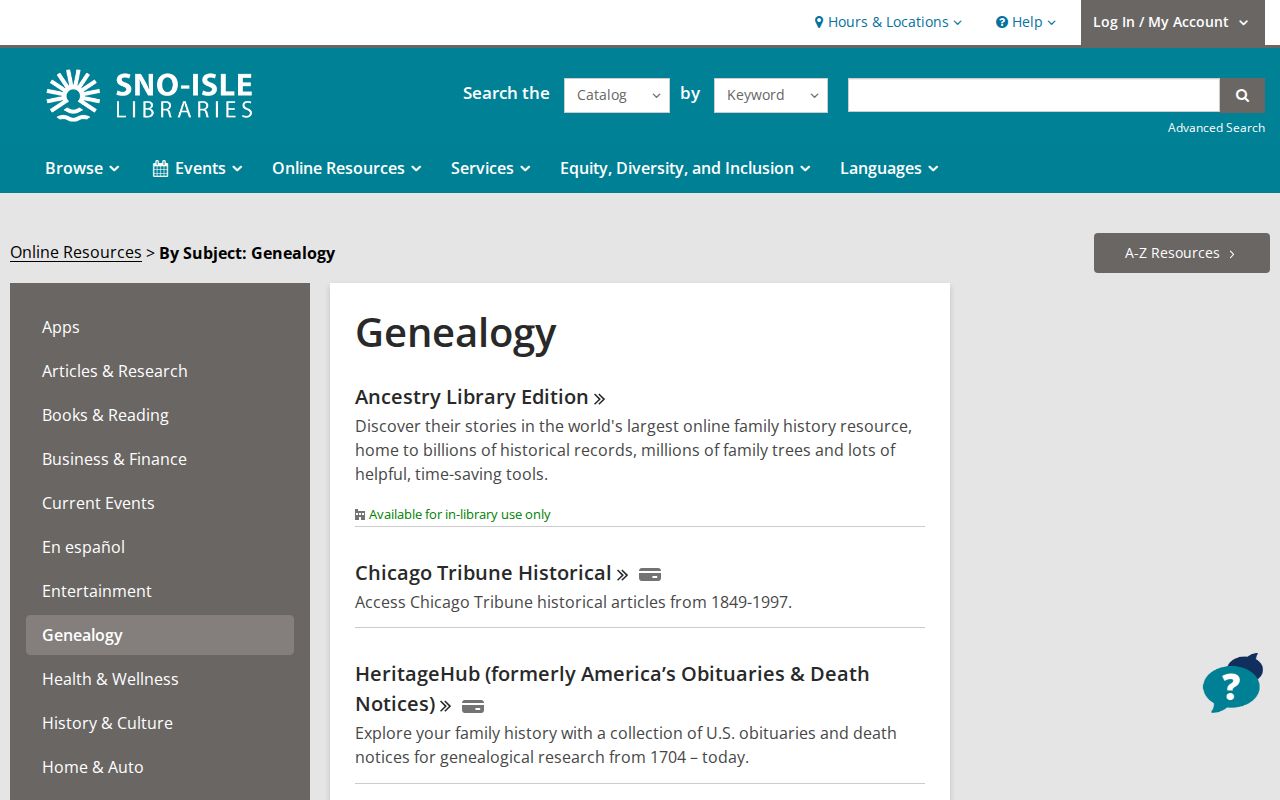
The Sno-Isle genealogy resources provide several ways to continue a previous-resident search. Ancestry Library Edition works inside a branch or on branch Wi-Fi. MyHeritage and Heritage Hub are available from home with a library card. The system also offers local newspapers, microform readers, local photo collections, FamilySearch links, and Book a Librarian help.
The genealogy resource screen below marks the library route for Eastmont household research.
The library's property-research guide warns that assessor records may show only the last few owners and that a directory shows residence rather than title. Search newspaper databases by name, address, and date. Save the issue and page for later checks instead of treating a clipped notice as a complete fact.
Bridge Eastmont Resident Place Names
Eastmont became a census-designated place in 2010 from Seattle Hill-Silver Firs. Older directories, deeds, maps, and census records may instead use Seattle Hill-Silver Firs, Everett, Snohomish, Silver Firs, a subdivision, or a rural road label. USPS city text is a delivery convention and does not settle the parcel's legal location.
The Snohomish County 1952 map layer offers a visual bridge for old roads and place names.
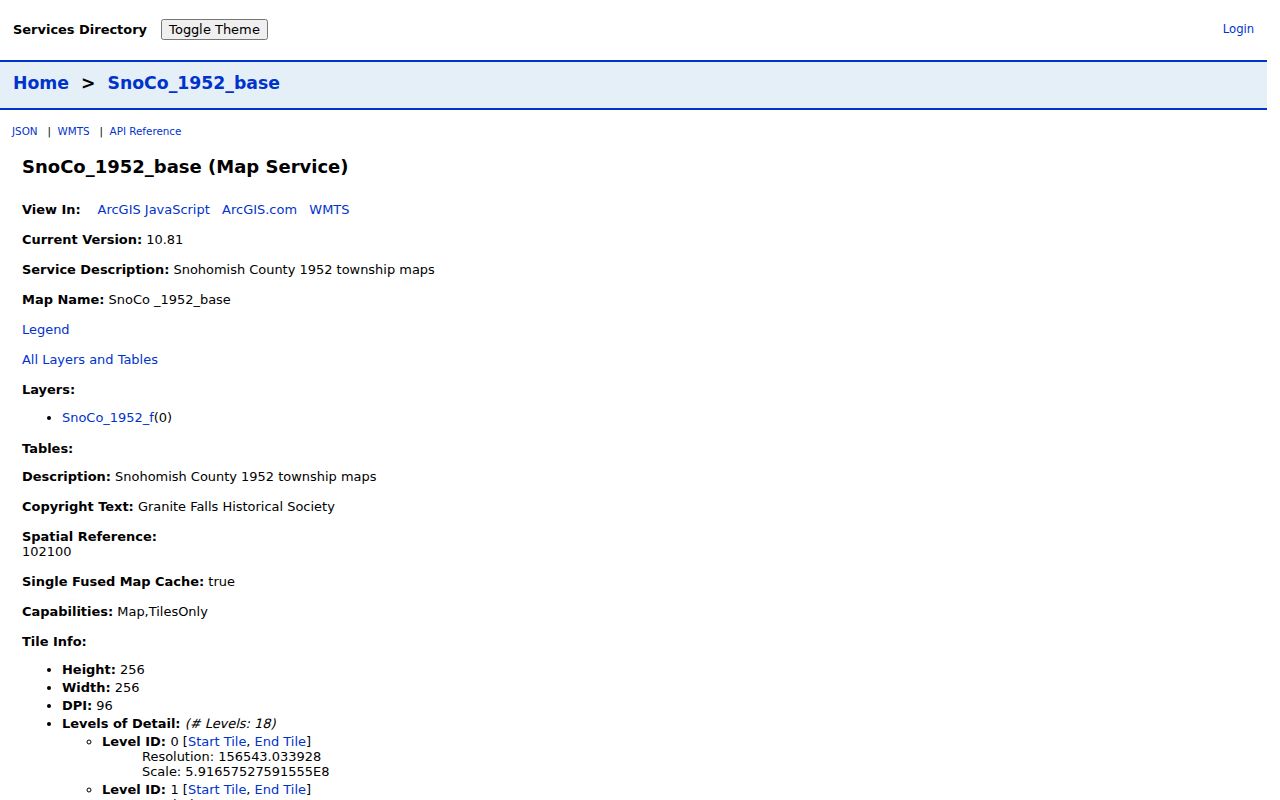
Compare the historic map with the current parcel, subdivision, lot, block, and legal description. No official Eastmont street-renumbering or readdressing year was found, so do not invent one. The verified continuity method is to match the land, then test each old address label.
Date an Eastmont Resident Address
Snohomish County Planning and Development Services advertises current and historical permit search by project number, parcel ID, or address. Use the public Project Status route with both the current address and parcel. A permit can establish a work date, inspection, plan, or named project contact. It does not by itself prove ownership or identify the whole household.
SCOPI's aerial layers can also show whether development changed between 2017 and 2024. Structure age is not the same as length of ownership, and a building may have moved or been replaced. Keep physical evidence in its own column beside deeds and occupant sources.
Note: Nearby Everett utility research has a pre-1908 fire gap and only limited surviving hookup clues, not a complete Eastmont utility archive.
Courthouse Fire and Eastmont Records
Snohomish County was created in 1861, and Everett became the county seat in 1897. The old courthouse burned on August 2, 1909. A Mission-style replacement followed. That event helps explain why very early searches may need several repositories, but it is not proof that every county record vanished.
When a deed book, probate lead, or tax record cannot be found, check the Recording Division, Washington State Archives Northwest Regional Branch, Snohomish Historical Society, newspapers, reconstructed indexes, and surviving microfilm. The historical society lists title abstracts, maps, early court records, obituaries, school material, and organization records, with access arranged because holdings can be fragile.
The Snohomish Historical Society archives page shows the local collection route for gaps in an Eastmont previous-resident trail.
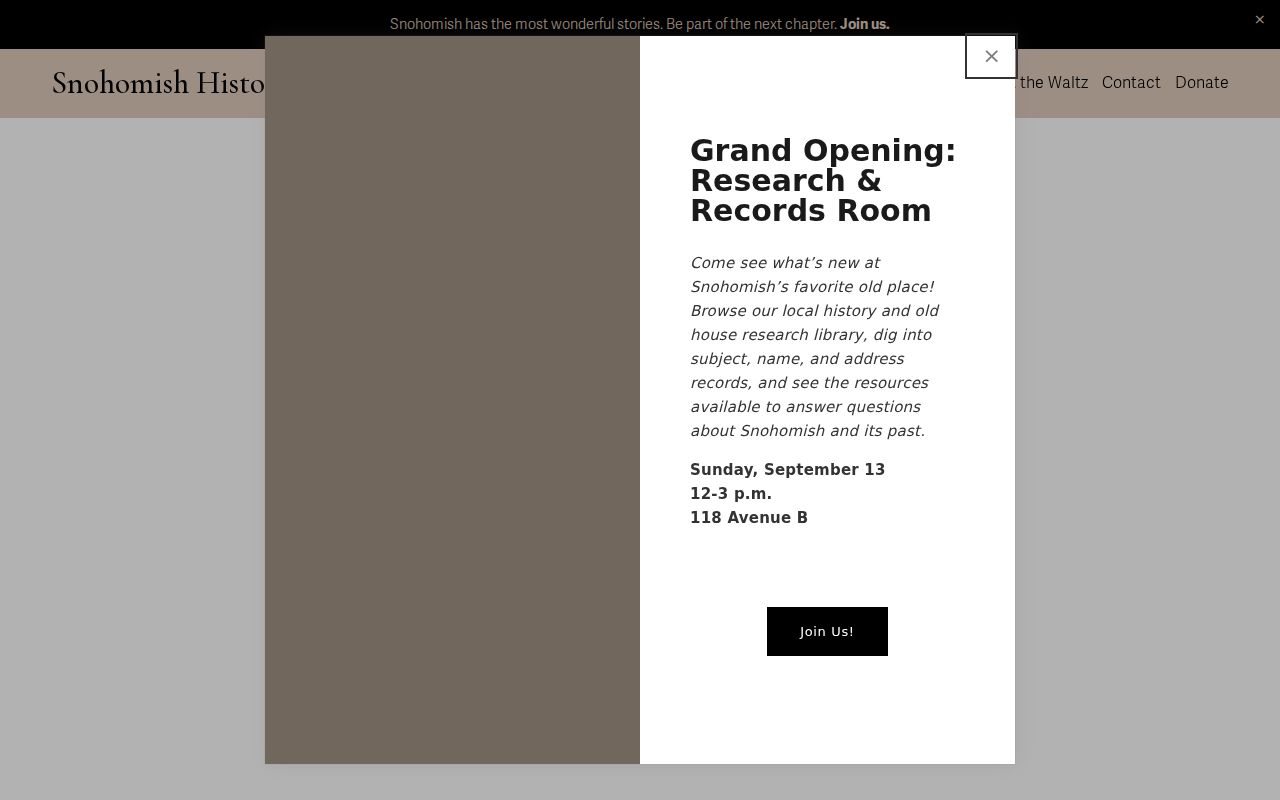
Its holdings are incomplete and may be stored off-display, so arrange access and give staff a name, address, date range, and record type.
Close an Eastmont Resident Trail
An obituary can connect a former occupant to relatives, a move, an organization, or a death date. Treat it as a lead and compare it with another record. The Snohomish County Clerk holds public Superior Court probate files and the will repository, subject to court access rules and any redaction or restriction. Selected older court records may also appear through Washington Digital Archives.
Search the probate docket by party and case type, then request the actual file from the Clerk if needed. An estate representative, heir, or recorded transfer after death can extend the land trail. None of those roles proves that the person lived at the Eastmont address, so keep the obituary, probate role, and deed party labeled by source and date.
Eastmont Past Household Limits
Previous residents are not the same as former owners. A person can appear in a directory without being on a deed, and a title party can live elsewhere. Census schedules describe a household at one date. Obituaries, school records, newspapers, and permits add context, but each may contain mistakes or omit people.
Use at least two independent details before linking a name to an Eastmont address. Good matches include the same full name and spouse, a stable legal description, a consistent date range, or a recorded transfer paired with a directory entry. Protected, sealed, missing, and not-yet-released records will leave honest gaps.
Lawful use. Research past residents for family history, house history, or lawful personal curiosity. Never use a record to track, harass, or harm a living person.