
Eastmont Directory Years on Record
Eastmont city directory research begins with county collections, not an Eastmont-only annual series. The Washington State Library county directory catalog lists discontinuous Snohomish County runs. It does not name a publisher for every volume, so a catalog record or title page must supply that fact. Availability also needs confirmation before a visit. The State Library closed to general public access in 2025 because of funding and now directs researchers to appointment-based access and its librarian email.
| Historical set | Coverage | Custodian | How to use it |
|---|---|---|---|
| Early Snohomish County directories | 1882-87; 1901-20; 1922-23; 1925-33; 1935; 1937 | Washington State Library | Ask about appointment and volume availability |
| Later county directory runs | 1952-82; 1984; 1992-98; 2000-05 | Washington State Library | Browse names and any address sections present |
| Genealogy databases | Census, historical records, and obituaries; local spans vary | Sno-Isle Libraries | Ancestry in branch; MyHeritage and Heritage Hub from home with card |
| Regional archives | Land, court, school, tax, and early vital series | Northwest Regional Branch | Appointment, mail, or email request |
A blank year is a shelf gap, not proof that a household left Eastmont. No official source established a complete reverse-directory run, the first Eastmont-specific volume, or the last printed Eastmont book. Record the missing year, then move to a census, newspaper, tax record, map, or nearby volume. This matters because the current Eastmont name did not define the CDP until 2010.
The State Library catalog page is the source for the verified county runs.
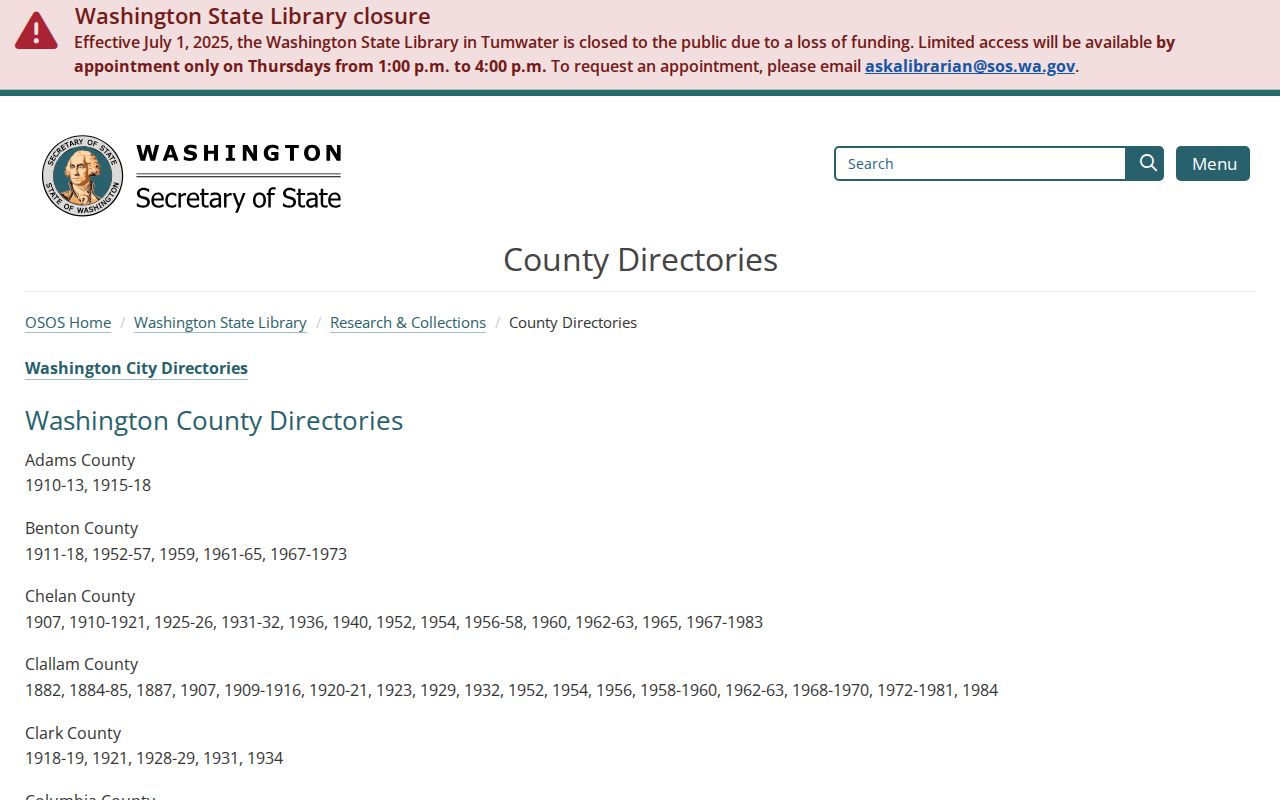
Its broken sequence makes the missing-year warning visible and keeps the research tied to the catalog rather than a guessed annual run.
Eastmont City Directory Access
Sno-Isle genealogy resources provide the most practical first stop near Eastmont. Ancestry Library Edition works inside a branch or on branch Wi-Fi. MyHeritage Library Edition and Heritage Hub can be used from home with a Sno-Isle card. The Snohomish branch holds local-history and genealogy material for in-library use, while staff can help with newspapers, microform, scanners, printouts, and Book a Librarian requests.
Each channel answers a different need. A city directory supplies a dated name and address. Census collections may reveal a household once the schedule is public. Heritage Hub and the local newspaper guide can lead to obituaries, school news, moves, anniversaries, or community notices. NewsBank supports keyword and date searching plus saving, printing, or emailing results. Where digital searching fails, Snohomish and selected branches retain microform readers.
The Sno-Isle genealogy page shows the database and research-help entry point.
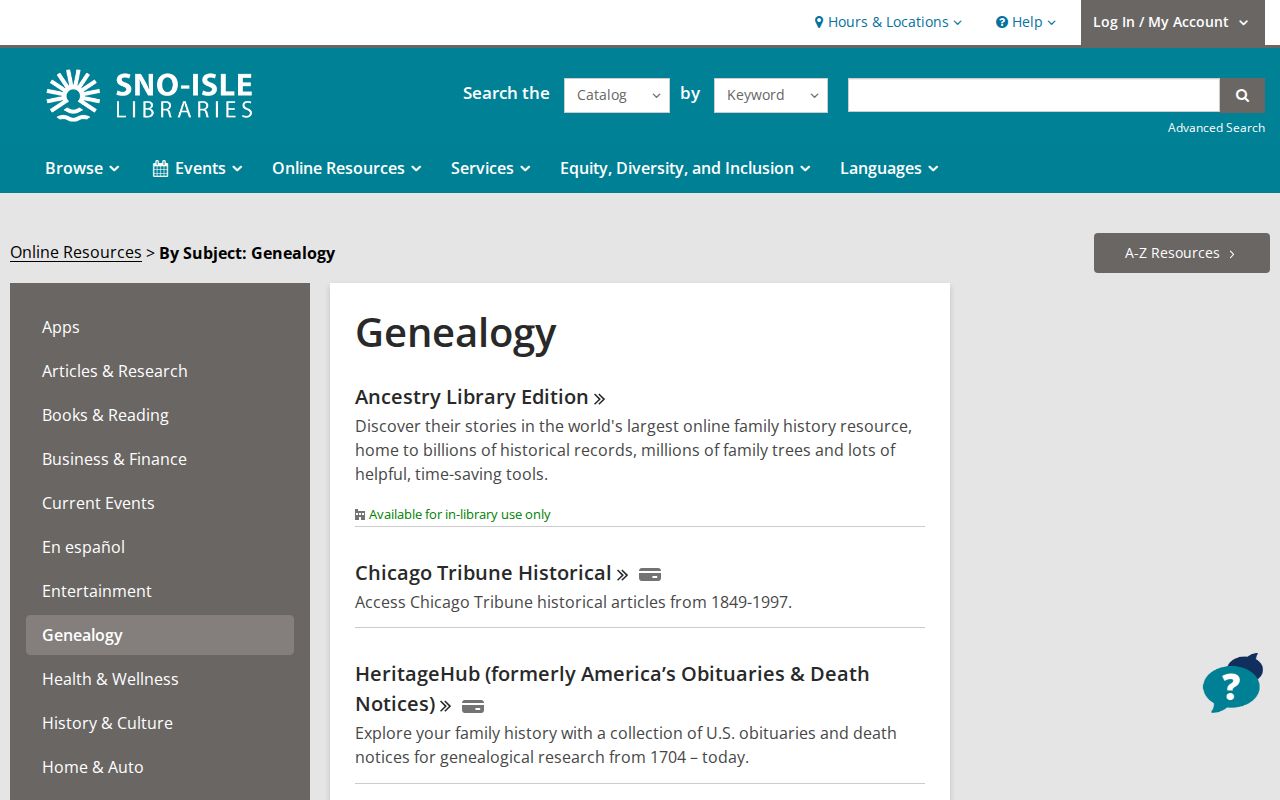
That access split tells an Eastmont researcher whether a branch visit or library-card login is the right next step.
The Snohomish Library location page supports planning for the local-history collection.
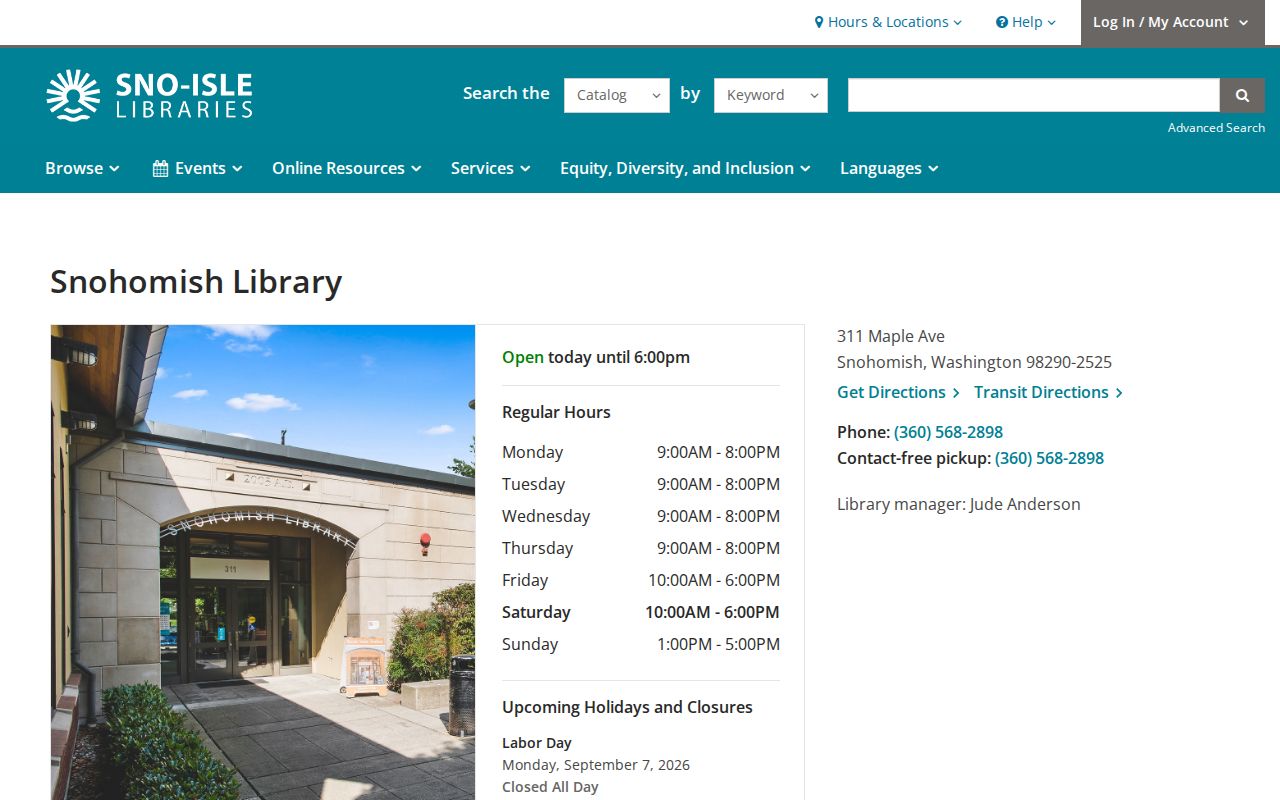
The branch is a practical place to ask about in-library reference works, newspaper access, microform, and staff help.
Note: Ask staff about the exact title and year before traveling, since local holdings and database coverage can change.
Eastmont Directory Archive Partners
The Snohomish Historical Society archives preserve photographs, newspaper items, early court records, obituaries, title abstracts, military material, maps, school records, yearbooks, organizations, business records, and scrapbooks. The collection is incomplete, and fragile or off-display items need prior arrangement. That limit is worth knowing before treating a catalog miss as proof that no record exists.
The Washington State Archives Northwest Regional Branch covers Snohomish County through auditor, clerk, treasurer, land, tax, court, naturalization, school, marriage, and early vital series. Researchers may use the Bellingham branch by appointment or send mail and email requests. Washington Digital Archives adds online collection searching, but results depend on the selected series and whether an image was digitized.
The Everett Public Library Northwest Room offers regional photographs, manuscripts, maps, audiovisual sources, and local-history publications. Send a focused request with the printed name, date range, address or place label, record type, and any citation already found.
The Historical Society archive page reflects the breadth and access limits of that local collection.
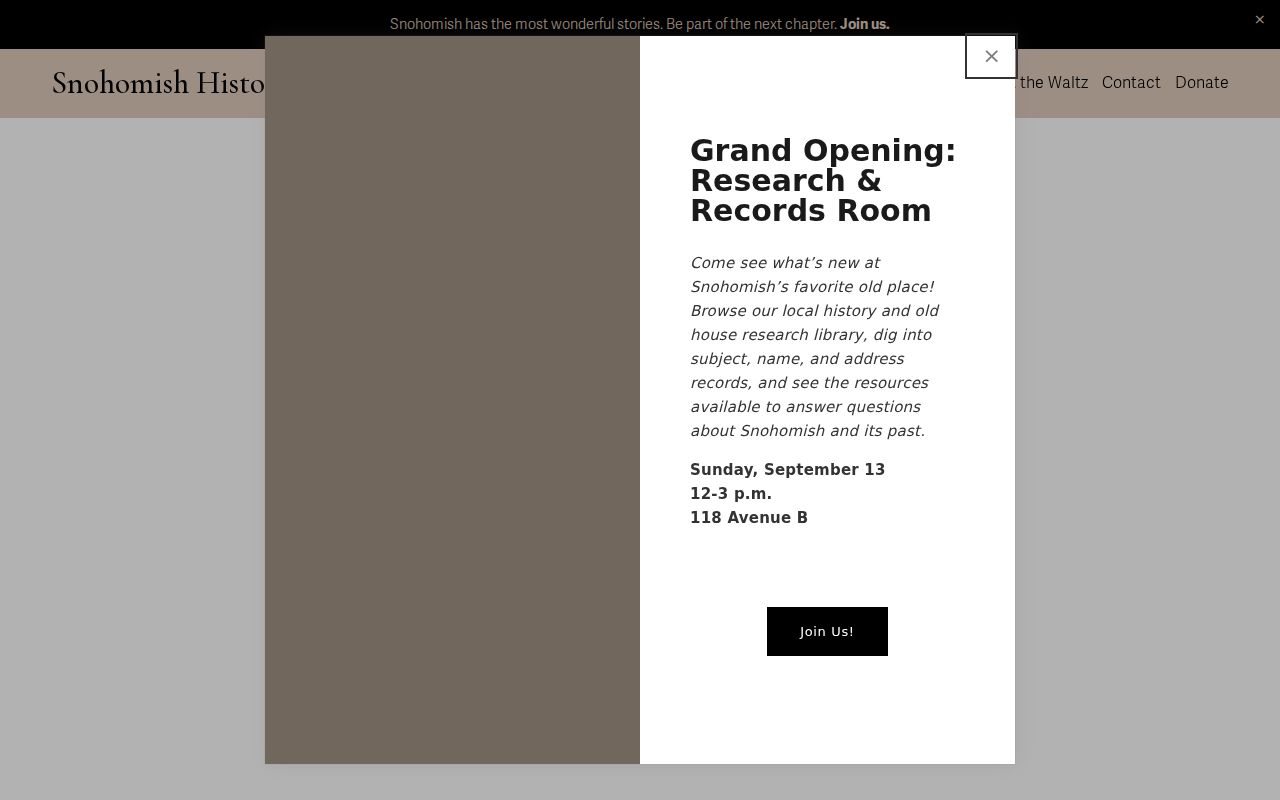
Its prior-arrangement rule is a key part of the access path, especially for fragile material that is not kept on display.
Read Eastmont Directory Entries Closely
A printed entry is compact evidence. The Sno-Isle property research guide uses a historical Padden entry at 421 Avenue A to show how names, address text, and status marks work. It is a teaching example, not a claim about an Eastmont resident. Read the abbreviation key from that exact volume before expanding any code, and save the page and year with the transcription.
| Printed name | Surname, given name, and spelling as typeset |
|---|---|
| Relationship | A spouse may appear in parentheses |
| Address | Street number, street name, and room details when printed |
| Status marks | h may mean home and b may mean boarder, subject to the key |
| Other clues | Widow or student notation and an occupation or place affiliation |
- Criss-cross directory
- A directory arranged by street or address, allowing address-first searching where provided.
- Householder index
- A list focused on people identified as household heads, rather than every person present.
- Abbreviation key
- The volume’s own legend for shortened words and status marks. Save it before interpreting an entry.
A city directory entry shows reported residence, not deed title. Test ownership separately through county parcel and deed records. For current address research, use the Eastmont street directory workflow.
Older Names in Eastmont Directories
Eastmont’s current name can hide a sound historical match. Census notes say the CDP formed in 2010 from Seattle Hill-Silver Firs. Earlier directory, census, map, and newspaper records may use Seattle Hill, Silver Firs, Everett, Snohomish, or a road or subdivision name. A postal city is not proof of municipal limits, and Eastmont has no city clerk maintaining its own old resident books.
Build a small place-name list before searching. Keep the modern county situs address, parcel number, legal description, subdivision, likely postal labels, and any former community term. Search the year’s own index under those terms. When a street label seems to change, use the legal description and a map as the bridge. No official Eastmont street-renumbering year was found, so do not assign a date without evidence.
Map Eastmont Directory Clues
Historic maps test whether an address was plausible in the year printed. The Granite Falls Historical Society map layers can be searched by address or place name and include ca. 1910 and early-county material. A 1952 Snohomish County base layer provides another visual checkpoint. Maps show roads and development patterns, but they do not prove residence or title.
The historic 1952 county map layer shows the kind of visual evidence available for Eastmont city directory research.
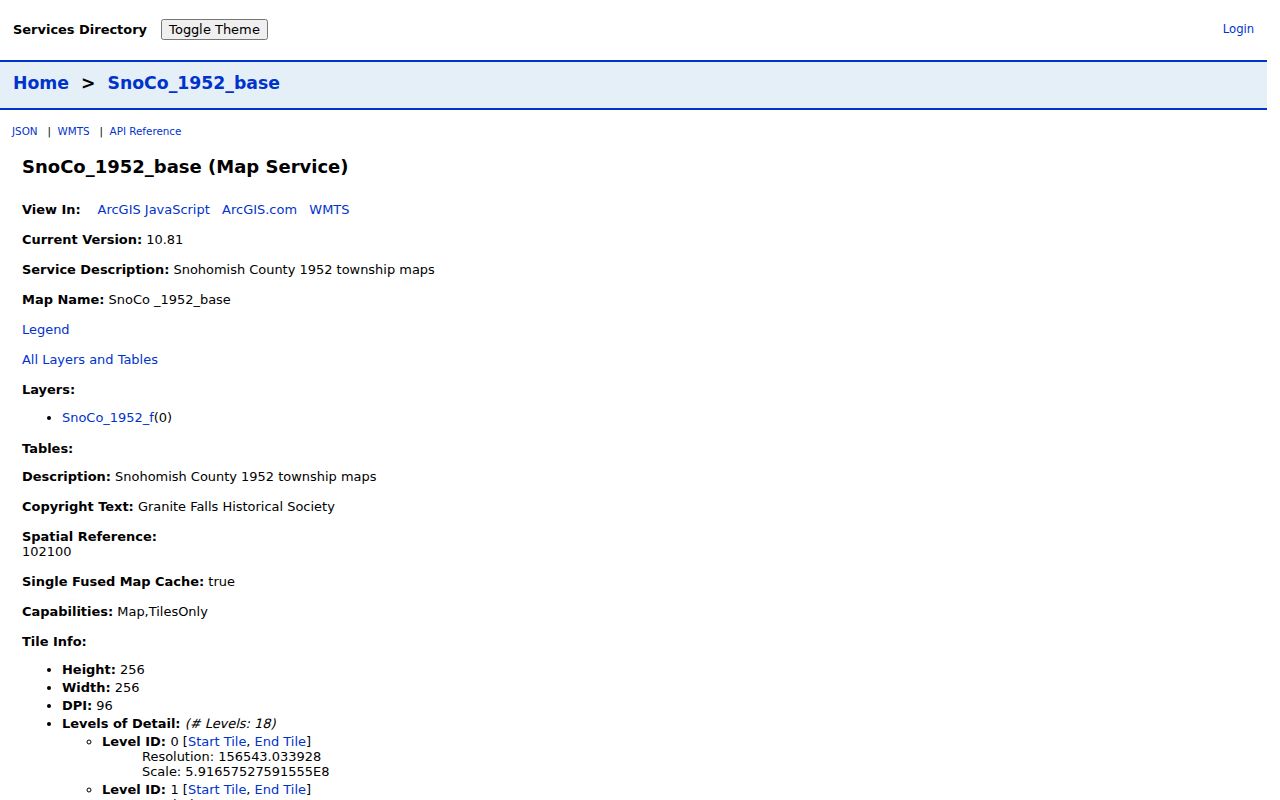
The layer can bridge a place name or road clue, but the dated directory and census still provide the people evidence.
Federal census schedules available through 1950 can add household context. Later schedules remain closed under the 72-year release rule. Compare a directory close to a census year, then check whether the name, household, street, and nearby people agree. Eastmont’s present boundary did not exist in older schedules.
Eastmont Directory Shelf Timeline
The dates show why one neat annual Eastmont sequence cannot be promised. They combine verified directory runs with community and courthouse history.
| Date | Directory or records event |
|---|---|
| 1861 | Snohomish County was created. |
| 1882-87 | The first directory run listed on the State Library county page. |
| 1909 | The 1897 county courthouse burned; surviving books and parallel sources still need checking. |
| 1952-82 | The longest continuous directory span shown in the catalog. |
| 2000-05 | The latest verified directory run shown there. |
| 2010 | Eastmont formed as a CDP from Seattle Hill-Silver Firs. |
The courthouse fire is a reason to widen the source search, not a claim that all early county material vanished. Archives, papers, and title abstracts may preserve a parallel trail.
Trace Family Through Eastmont Directories
Family history works best as a sequence of dated checks. Begin with one verified name, place, and time. Move through Eastmont city directories in small steps, and preserve negative results as gaps rather than conclusions. A person who disappears may have moved, died, changed names, been omitted, or fallen into a missing publication year.
- Choose the closest directory year and search each plausible surname spelling and period place label.
- Transcribe the full entry, including spouse, address, marks, occupation, page, title, and year.
- Check adjacent years. Note moves, changed status, and gaps without guessing why.
- Use an address section when present, then compare a released census, newspaper, obituary, yearbook, or cemetery record.
- Test title separately through the Assessor and Auditor, since an occupant is not always the deed holder.
- Send a focused appointment, mail, or email request when a volume is missing.
Keep source boundaries clear. An obituary can explain a death, a deed can show a transfer, and a directory can establish what was printed in one year. Two independent sources with matching name, date, and place make the case far stronger.
Create a citation as soon as a match appears. Record the directory title, stated coverage area, publication year, page number, image number if present, exact spelling, address, and each mark copied from the entry. Then note where the volume was viewed and the date of access. This short habit makes later comparison much easier. It also lets another family researcher return to the same page without relying on a loose transcription. If the next available year changes the address, search both the old and new address in newspapers and maps before concluding that the whole household moved together.